
Medical Weight Management: It’s No Longer Just About Willpower


Weight & Metabolic Health Medicine


Medical Weight Management: It's No Longer Just About Willpower
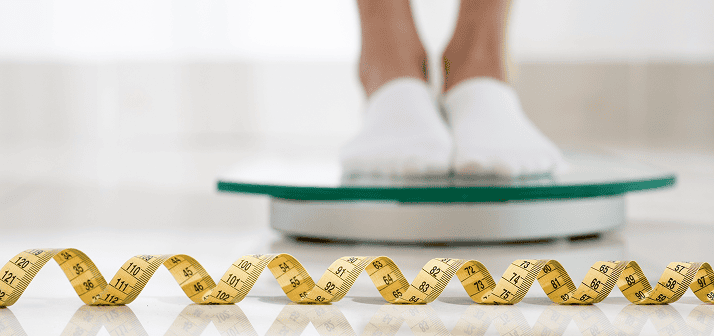
For decades the advice was eat less, move more — and when that failed, the failure was yours. We now understand enough about weight regulation to know that was never a fair verdict.
Isn't BMI enough?
BMI is a screening tool. It was designed for populations, not people, and it cannot distinguish muscle from fat or tell you where the fat sits.
Two things make it especially weak here.
First, the numbers are different in Asia. Singapore uses lower cut-offs than the global standard — healthy 18.5–22.9, raised risk from 23.0, high risk from 27.5 — because Asians develop diabetes and cardiovascular disease at lower BMIs. At the same BMI, Asians carry roughly 3–5% more body fat than Caucasians, with more of it stored viscerally. A “normal” BMI here is not the reassurance it looks like.
Second, BMI misses the two situations that matter most clinically: the person with a normal BMI and very little muscle, whose metabolic risk is real and invisible — and the person with a high BMI and substantial muscle, whose risk is being overstated.
Why is "eat less, move more" so hard for some people?
Because for some people the second half isn’t available, and the first half doesn’t stay.
Some people genuinely cannot increase output.
- Painful joints. Knee or hip osteoarthritis makes weight-bearing exercise hurt — and weight loss is one of the most effective treatments for it. So the treatment requires the thing the condition prevents. This trap is extremely common and rarely named out loud.
- Heart or lung disease. Exertion is limited by breathlessness or by medical advice.
- Mobility problems, neurological conditions, previous injury, or age-related frailty.
- Very high starting weight, where movement is mechanically hard before it’s anything else.
For these people, “just exercise more” isn’t unhelpful advice. It’s a closed door.
And restriction alone doesn’t hold. When you lose weight, the body defends the loss: appetite hormones shift toward hunger, satiety signals weaken, and resting metabolic rate falls by more than the weight loss alone predicts. These changes can persist for years. This is why most people regain — not because they stopped caring, but because they are fighting a system that is actively working to restore the previous weight.
Then there’s the muscle problem. Weight lost through restriction alone is typically around a quarter muscle. Regained weight comes back disproportionately as fat. Repeat that cycle a few times and body composition is worse than at the start, at the same weight on the scale.
If you’ve lost and regained several times, that isn’t a character flaw. It’s the predictable output of the method.
Our Clinical Insight
Weight is not a measure of effort, and the scale is not a measure of health. The people who struggle most are often the ones whose bodies are defending a higher weight hardest — and telling them to try harder has never worked. What has changed is that we can now measure what someone is actually made of, identify the specific barrier in front of them, and where appropriate use medication to make the lifestyle change possible rather than substitute for it. The goal was never to be lighter. It was to carry less fat, keep more muscle, and still be walking unaided at 80.
What tells you more
Body composition analysis — most commonly bioelectrical impedance, sometimes DEXA — splits your weight into fat, muscle and water. This changes the conversation from how heavy am I to what am I made of, which is the question that actually predicts health.
Visceral fat is the fat around your organs, as opposed to under your skin. It is metabolically active, drives insulin resistance and inflammation, and is far more strongly linked to diabetes and heart disease than total fat. Two people at the same weight can have very different amounts of it.
Skeletal muscle mass is protective — for metabolism, for blood sugar, for bone, for the knees, for staying independent later. It’s also the thing most likely to be sacrificed during aggressive weight loss.
Waist circumference is the cheapest useful measurement in medicine. No equipment, and it captures central fat that BMI misses entirely.
Why this matters practically: if you lose 8 kg and 4 of them are muscle, the scale rewards you and your metabolism punishes you. Resting metabolic rate falls, weight regain becomes more likely, and you end up heavier in fat than when you started. This is the single most common way weight loss quietly fails.
📊 Where do you actually sit?
Against Singapore’s cut-offs, not the international ones. Three numbers, because no single one of them is enough on its own.
None of these can tell muscle from fat, or say where the fat is stored. They’re screening numbers — useful for deciding whether to look closer, not for concluding anything on their own. Body composition analysis measures what these three can only estimate.
So what actually works?
- Protect muscle deliberately. Resistance training two to three times weekly during weight loss, and adequate protein. This is non-negotiable, not optional. It’s what determines whether you end up lighter and stronger or lighter and frailer. (More on why muscle matters so much in Sarcopenia.)
- Go slower than feels satisfying. Aggressive restriction accelerates muscle loss and metabolic adaptation. Gradual loss of around 5–10% over six to twelve months delivers real health improvement and is far more likely to stay off.
- Treat maintenance as the actual project.Mostprogrammes end at the target weight, which is precisely when the biology starts pushing back hardest. The plan for month 18 matters more than the plan for month one.
Where does medication fit?
Here is the honest position, in an area with a great deal of noise around it.
A newer class of medicines — GLP-1 receptor agonists, and more recently agents combining GLP-1 with GIP activity — work on the appetite and satiety pathways in the brain and gut rather than on willpower. They reduce hunger and increase fullness. In trials they produce weight loss considerably beyond what lifestyle change alone typically achieves, with the dual-agonist agents generally outperforming the single-agonist ones. An older option, orlistat, works differently — blocking absorption of some dietary fat — with more modest results and predictable gastrointestinal effects.
The thing nobody tells you before starting :
Up to a third of the weight you lose on these medicines can be muscle.
Read that again, because it is the single most important sentence on this page.
The drug suppresses appetite. It does not choose what your body breaks down. So unless someone builds muscle protection into the plan from day one, the scale drops beautifully — and a meaningful share of what left was the tissue that runs your metabolism, protects your knees, controls your blood sugar and keeps you independent at 80.
Then you stop the medicine. Appetite returns. The weight comes back — and regained weight comes back as fat, not muscle. Do that twice and you can arrive at your original weight with a worse body than the one you started with.
This is entirely preventable. It requires three things, none of them optional:
- Resistance training two to three times a week, from the first week, not once you’ve “lost some first”
- Protein at every meal, at a target set for your body weight
- Body composition measured, not just weight — so you can see whether you’re losing fat or losing yourself
The medicine is the easy part. Protecting what you keep is the actual work — and it’s the part that decides whether this was worth doing.
The rest of the honest picture
- These are prescription medicines with real criteria. In Singapore they’re indicated at specific BMI thresholds, with comorbidity requirements at lower thresholds. They’re not lifestyle products, and they’re not for cosmetic weight loss.
- Side effects are common, mostly gastrointestinal — nausea, vomiting, constipation — and there are conditions in which these drugs shouldn’t be used at all. That needs a proper consultation, not an online form.
- Buying these online or from unlicensed sellers is dangerous — counterfeit product, wrong dosing, nobody monitoring you.
The summary: for people who meet the criteria, these medicines have genuinely changed what’s achievable — particularly for those who can’t exercise their way out. They aren’t a shortcut past the work. They make the work possible.
⚖️ Cutting intake alone — what actually comes off?
Reduced intake alone
Eating less — with or without medication — and nothing else
Reduced intake + resistance training and protein
Exactly the same weight off the scale — different composition
Your two numbers
Getting a proper picture
A weight assessment worth having looks at body composition, not just weight — plus metabolic bloods, the barriers specific to you, and whether medication is appropriate for your situation. If it is, it comes with a muscle protection plan attached and a clear answer to what happens after.
Cresta Medical · 10 Chai Chee Road, #01-01, Singapore 467010
Make your health a priority
Schedule an in-clinic appointment, or speak with Dr Alexis Wong and our care team online — whichever works best for you.