
Sarcopenia: The Health Condition You’ve Probably Never Heard Of


Healthy Ageing


Sarcopenia: The Health Condition You've Probably Never Heard Of
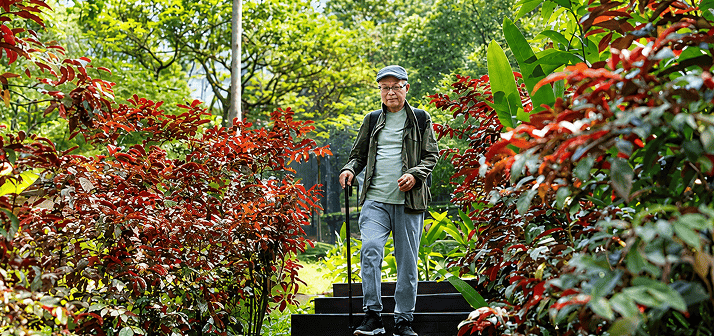
Most people spend their fifties worrying about the number on the scale. Very few worry about the thing that will actually determine whether they’re still climbing their own stairs at 80.
What is sarcopenia?
The progressive loss of muscle mass, strength and function with age. Not weakness from illness or inactivity alone — a distinct condition, with diagnostic criteria, that can be measured and treated.
The scale of it here is startling. In the Yishun Study — a community sample of Singaporeans — 32% of those aged 60 and over met the criteria. In post-acute hospital settings, local studies have found considerably higher rates again. Most people have never heard the word.
Muscle mass typically peaks in your thirties and then declines — slowly at first, then accelerating after 60. Strength falls faster than mass, which is why someone can look unchanged and be measurably weaker. Without deliberate resistance training, the decline is more or less the default setting of a human life.
Why it matters more than fat
This is the reframe.
Excess fat raises your risk of disease. Losing muscle takes your independence. Those are different orders of consequence.
Muscle is what gets you off the toilet, up the stairs and out of a chair unaided. It’s your largest site for glucose disposal, so losing it worsens blood sugar control. It’s what stops a stumble becoming a fall, and a fall becoming a hip fracture — which for an older adult is a genuinely life-altering event. It’s your reserve when you get ill: people with more muscle recover better from surgery, infection and hospital stays, because illness burns through muscle fast.
And the two problems travel together. Sarcopenic obesity — low muscle and excess fat — is common and carries worse outcomes than either alone. The scale looks stable. The body underneath has quietly swapped one tissue for another.
Sarcopenia is also named in Singapore’s national knee osteoarthritis guideline as an accelerator of joint disease. The muscle around a knee is the shock absorber. Lose it and the joint takes the load directly. (See Knee Osteoarthritis.)
How would I know? What are the early signs?
It creeps, which is exactly the problem. Nothing hurts. You just do slightly less, slightly more slowly, and adjust without noticing you’ve adjusted.
Signals worth taking seriously:
- Jars and bottles have become harder to open
- You use your hands to push up out of a chair — and didn’t used to
- You’ve started taking the lift for one floor
- People overtake you on the pavement more than they did
- Walking feels less steady, or you’ve had a stumble
- Carrying groceries has got noticeably harder
- Weight is stable but clothes fit differently — less firm, softer at the limbs
The chair-arm one is the most reliable. Most people can date roughly when it started, once asked.
Can it be reversed?
Yes. And here is the number that should stop you
Our Clinical Insight
In one published intervention, sarcopenia in the treated group went from 35% to 0%.
Not slowed. Not stabilised. Gone.
Resistance training plus nutritional support. Every person in that group who met the criteria for sarcopenia at the start no longer met them at the end.
Sit with how unusual that is. There is no drug that reverses ageing. There is no supplement that restores what the years take. But this — the loss of the muscle that keeps you out of a wheelchair — turns out to be one of the few age-related conditions that will genuinely go backwards if you make it.
Most of medicine is about slowing decline. This is one of the rare corners where you get to undo some of it.
What works, in order of importance:
- Resistance training. Nothing else comes close.Two to three sessions a week, sustained for at least four months, is what Singapore’s clinical guidelines endorse as first-line treatment. Not walking — walking is excellent for many things, but it does not build muscle. Ithas to be resistance: bands, machines, dumbbells, or your own body weight.
The crucial point, because it stops so many people before they start: you are not too old. Meaningful strength gains have been demonstrated in people in their eighties and nineties, including nursing home residents. The response to training doesn’t disappear with age. It just gets neglected.
Start with the movements that matter functionally — sit-to-stand, step-ups, a push, a pull, a carry. Progress by adding load or reps, slowly and consistently.
- Enough protein, spreadthroughthe day. Older adults need more protein than younger adults, not less, because ageing muscle responds less efficiently to it. Around 1.0–1.2 g per kg of body weight daily is the working target, and higher if you’re training. For a 65 kg person that’s roughly 65–80 g a day.
Distribution matters as much as total. Most people eat almost no protein at breakfast, a little at lunch, and a large amount at dinner — which wastes much of it. Roughly 25–30 g at each meal is far more effective than the same total in one sitting.
- Vitamin D, ifyou’relow. Deficiency is common in Singapore, oddly — indoor living, sun avoidance, covered clothing. It affects muscle function and falls risk. Easily tested, easily corrected.
- Treatwhat’sdriving it. Thyroid disease, poorly controlled diabetes, kidney disease, chronic inflammation and some medications all accelerate muscle loss. Worth ruling out rather than assuming it’s just age.
- Don’t crash diet.Rapid weight loss without resistance trainingstrips muscle. If you’re losing weight — especially on appetite-suppressing medication — protecting muscle has to be built into the plan. (Medical Weight Management covers this.)
Our clinical insight
Most adults worry about gaining weight as they get older. Far fewer realise that losing muscle may have an even greater impact on independence, mobility and healthy ageing. Fortunately, this is one of the few age-related conditions that can often be slowed — or even partially reversed — with the right approach.
The window is wider than people assume, and the intervention is unglamorous: lift something heavy a couple of times a week, eat enough protein, and check the numbers occasionally so you can see which direction you’re heading.
The best time to start was in your forties. The second best is this week — and unlike most of medicine, that’s not a platitude here. The evidence in the very old is genuinely good.
How it's actually tested
Straightforward, and mostly doesn’t require a hospital.
Grip strength — the single best proxy for whole-body strength. Measured with a dynamometer in seconds. The regional thresholds used across Asia are under 28 kg for men and under 18 kg for women.
Walking speed — timed over a short distance. Under 1.0 metre per second is the threshold. There’s a rough real-world version: if you can’t comfortably cross at a pedestrian crossing before the green man starts flashing, that’s worth noting.
Chair stand test — five stands from sitting, timed. Twelve seconds or more counts as low performance.
Calf circumference — a tape measure. Under 34 cm in men, 33 cm in women is the screening threshold. Crude, free, and surprisingly useful.
Body composition — bioimpedance or DEXA to measure actual muscle mass and confirm the diagnosis.
SARC-F — a five-question screening questionnaire covering strength, walking, rising from a chair, stair climbing and falls. Takes a minute.
🔎 The one-minute muscle screen
Answer for how things are now, not how they were a few years ago. If you're filling this in for a parent, answer as they would.
What to do next
A screening tool, not a diagnosis. Sarcopenia is confirmed by measuring grip strength, walking speed and muscle mass — a screen only tells you whether those measurements are worth taking.
How it's actually tested
Straightforward, and mostly doesn’t require a hospital.
Grip strength — the single best proxy for whole-body strength. Measured with a dynamometer in seconds. The regional thresholds used across Asia are under 28 kg for men and under 18 kg for women.
Walking speed — timed over a short distance. Under 1.0 metre per second is the threshold. There’s a rough real-world version: if you can’t comfortably cross at a pedestrian crossing before the green man starts flashing, that’s worth noting.
Chair stand test — five stands from sitting, timed. Twelve seconds or more counts as low performance.
Calf circumference — a tape measure. Under 34 cm in men, 33 cm in women is the screening threshold. Crude, free, and surprisingly useful.
Body composition — bioimpedance or DEXA to measure actual muscle mass and confirm the diagnosis.
SARC-F — a five-question screening questionnaire covering strength, walking, rising from a chair, stair climbing and falls. Takes a minute.
📏 Two things you can measure at home right now
A tape measure and a chair. Both are used clinically, both have published thresholds, and both take under two minutes.
1 Calf circumference
- Sit with your knee bent at about 90°, foot flat on the floor
- Wrap a tape around the widest part of your calf
- Snug, not tight — don't compress the muscle
2 Five-times sit-to-stand
- Firm chair, back against a wall. Arms folded across your chest
- Stand up fully and sit down — five times, as quickly as you safely can
- Press start, then press stop the moment you sit down the fifth time
Neither of these diagnoses sarcopenia. Both are screening measures — muscle mass and grip strength are needed to confirm it. What they do give you is a baseline number, which is what makes progress visible when you retest in three months.
Find out where you stand
A muscle health assessment measures grip strength, walking speed, chair-stand time and body composition — then checks the medical causes that accelerate muscle loss. It gives you a baseline number, which is the thing that makes progress visible.
Cresta Medical · 10 Chai Chee Road, #01-01, Singapore 467010